





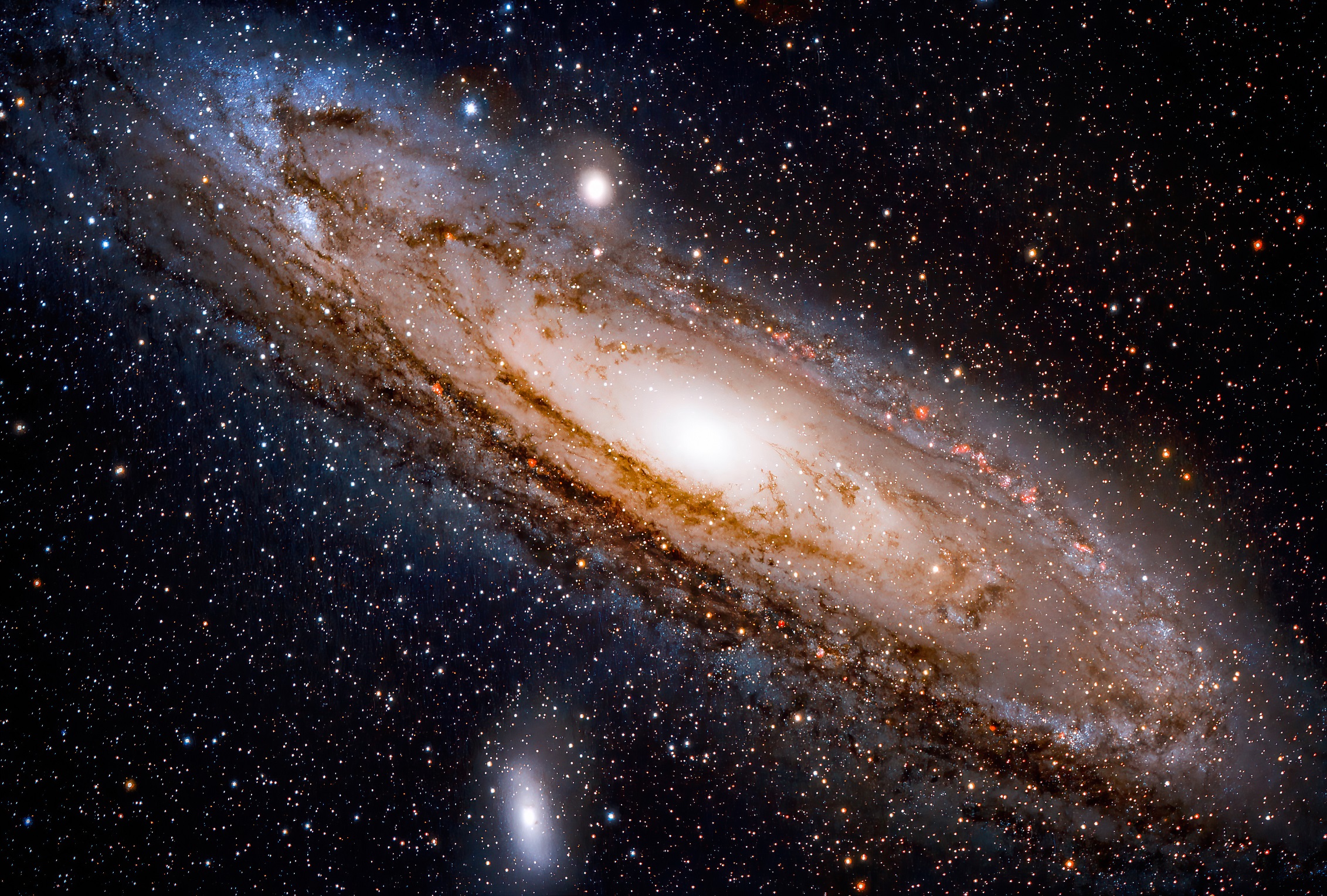
In a current astronomical breakthrough, a crew of researchers has made a superb discovery in the Andromeda Galaxy. They have diagnosed and cataloged nineteen Wolf-Rayet stars, dropping mild at the fascinating stellar populace of our neighboring galaxy. The findings provide treasured insights into the evolution and dynamics of large stars, enhancing our understanding of galactic systems and the broader discipline of astrophysics.
The Discovery:
Led by means of a collection of astronomers from famous institutions, they take a look at utilizing superior telescopes and spectroscopic techniques to survey an area of the Andromeda Galaxy. By focusing on the unique signatures emitted by big stars, the researchers recognized nineteen Wolf-Rayet stars scattered across the galactic panorama.
Wolf-Rayet stars, characterized by using their extreme stellar winds and high floor temperatures, constitute a critical level in the lifestyles cycle of large stars. The discovery of those stars inside the Andromeda Galaxy affords a treasured possibility to observe their properties and resolve the complicated tactics that power their evolution.
Implications and Significance:
The identification of 19 Wolf-Rayet stars in the Andromeda Galaxy holds widespread implications for our understanding of stellar evolution and galactic dynamics. These large stars play a crucial function in shaping their surrounding environments through their robust stellar winds, enriching the interstellar medium with heavy factors.
Studying the traits and distribution of Wolf-Rayet stars within the Andromeda Galaxy can help astronomers gain insights into the elements influencing their formation and evolution. Furthermore, those findings make contributions to our know-how of the broader mechanisms riding superstar formation and the existence cycles of galaxies.
The Andromeda Galaxy, being our closest spiral galaxy neighbor, serves as an ideal laboratory for reading extragalactic systems and evaluating them to our own Milky Way. By examining the Wolf-Rayet stars in the Andromeda Galaxy, astronomers can explore similarities and variations between the stellar populations in those neighboring galaxies, losing light on the underlying techniques in paintings.
Future Research and Observations:
The discovery of 19 Wolf-Rayet stars within the Andromeda Galaxy opens up thrilling avenues for destiny studies and observations. Astronomers can now behavior particular research to analyze the bodily residences, evolution, and interactions of those massive stars.
By leveraging state-of-the-art contraptions and technologies, researchers will delve deeper into the mechanisms that trigger the formation of Wolf-Rayet stars, the nature of their powerful stellar winds, and their function in shaping galactic ecosystems. This understanding will make a contribution to greater complete information on stellar evolution and galactic dynamics in the broader context of the universe.
Conclusion:
The identification of nineteen Wolf-Rayet stars within the Andromeda Galaxy marks a great milestone in the subject of astronomy. This groundbreaking discovery now not best expands our expertise of large celebrity populations inside our neighboring galaxy but additionally offers valuable insights into the problematic techniques governing the big-name formation and galactic evolution.
The ongoing research and destiny investigations inside the Andromeda Galaxy will continue to deepen our understanding of the cosmos, unraveling the mysteries of stellar evolution, and presenting useful data for astrophysical fashions. As our exploration of the universe progresses, discoveries like these deliver us in the direction of comprehending the good-sized tapestry of celestial items and their fundamental roles in shaping the cosmos.